
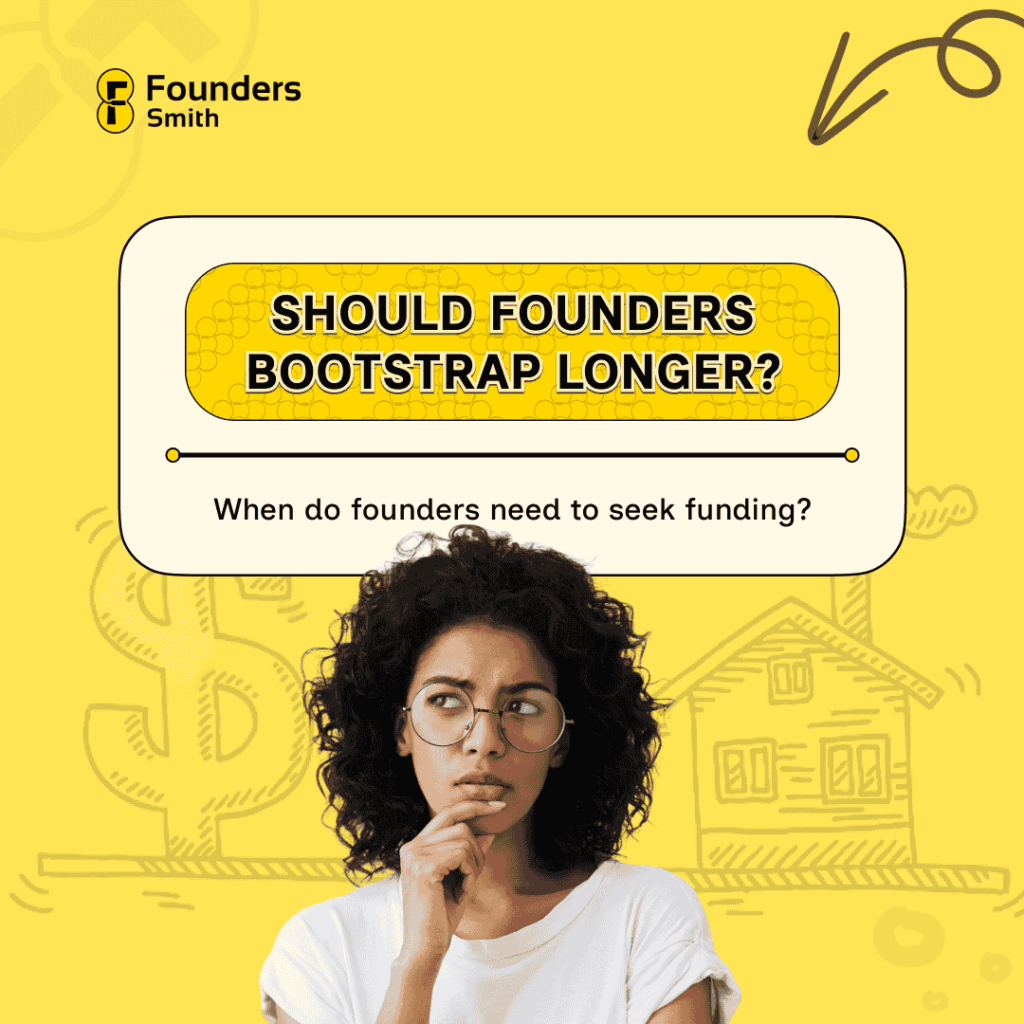
There’s a quiet pressure in the startup ecosystem, especially in Africa, to raise funding as quickly as possible.
Pitch decks are polished before products are stable. Founders chase investor meetings before they fully understand their numbers. And somewhere in that rush, a critical question gets ignored:
What happens when you build without external funding for longer than expected?
What Bootstrapping Actually Builds That Funding Can’t
In case you’re wondering, bootstrapping in business means starting and growing a company using only personal savings, operating revenue, and extreme cost-cutting, rather than relying on external funding like venture capital or bank loans
But bootstrapping isn’t just about operating without external capital. It’s about building with constraints, learning what actually drives revenue, making mistakes on a smaller, survivable scale, and proving your business works before you amplify it with capital
In other words, bootstrapping forces a kind of clarity that funding often delays. When there’s no external capital to fall back on, every expense is questioned, every feature must justify itself, and every customer matters.
This startup growth strategy is how companies like Mailchimp grew into billion-dollar industry leaders by focusing on revenue and sustainability long before external funding came into the picture.
For early-stage founders operating in African markets, this approach isn’t just smart; it’s often necessary. Yes, bootstrapping isn’t glamorous. But often, it’s where the real business gets built.
Signs You Should Bootstrap Longer
Bootstrapping longer can either sharpen your business or stall your growth. The difference lies in when and why you choose to keep going without external funding.
You probably need more time if:
- Your Revenue Isn’t Consistent Yet
If your growth depends on luck or one-off wins, you’re not ready.
- You Can’t Clearly Explain Your Unit Economics
If you don’t know your customer acquisition cost (CAC) or your lifetime value (LTV), investors will find out and may likely walk away. By the way, we explained what these terms mean in our previous post: That Strange Phase Between Growth and Stuck
- Your Growth Strategy Isn’t Sustainable
If you can’t say “we can do this again and scale it,” funding won’t fix it.
- You’re Still Pivoting Frequently
If you are constantly making changes to everything, it means you’re still unclear about your startup’s direction. Investors don’t fund confusion.
Why Staying Bootstrapped Longer Can Strengthen Your Startup
- You Build Around Revenue, Not Assumptions
When money is tight, assumptions don’t survive. Bootstrapping forces you to answer the only question that truly matters:
Will people pay for your product?
Without investor backing, there’s no room to hide behind projections or vanity metrics. Your business either generates value or it doesn’t. And that clarity becomes your biggest advantage later.
- You Develop Operational Discipline Early
Once money is available, inefficiencies tend to grow quietly in the background. Scarcity creates structure.
At Founders Smith, we’ve seen it happen repeatedly:
- Lean teams become efficient teams
- Processes are built with intention
- Waste is easier to spot
This kind of discipline is hard to come by after raising capital.
- You Stay in Control of Your Company’s Direction
Equity decisions made too early can shape your company in ways you didn’t intend.
Bootstrapping longer allows you to maintain ownership, experiment without pressure, and make long-term decisions without external influence.
That level of control is especially valuable in markets like Nigeria or Ghana, where founders already face structural challenges.
When Bootstrapping Starts Holding You Back
Let’s be honest, bootstrapping isn’t always ideal. There’s a point where staying lean stops being strategic and starts becoming limiting.
1. Growth Opportunities Slip Away
When demand outpaces your capacity, you miss strategic opportunities due to limited resources, and growth slows; it’s not because the idea is weak but because execution is constrained. At this stage, funding becomes a growth tool, not a survival tool.
Companies like Flutterwave needed external funding to scale infrastructure, expand across borders, and compete globally. Before then, they had identified a real infrastructure gap and built solutions that worked across markets and proved demand. The funding helped them scale aggressively across Africa and beyond. Bootstrapping alone wouldn’t have unlocked that level of growth. That’s the difference.
2. Market Timing Becomes a Risk
If you’re in a fast-moving industry (fintech, logistics, AI), moving slowly can mean losing the market, so speed matters, and markets are less predictable. Waiting too long to raise capital can mean that competitors scale faster, market share gets locked early, and your innovation becomes irrelevant, making your advantage disappear. Bootstrapping should strengthen your position, not cause you to miss your window.
3. The Pressure on Founders Increases
Bootstrapping often comes with hidden costs:
- Personal financial strain
- Limited hiring capacity, making small teams do too much
- Constant operational pressure
Sustaining that for too long can affect both decision-making and long-term vision. Not every founder has the runway to sustain that.
4. Some Opportunities Require Capital
Certain ideas simply need upfront investment, like infrastructure-heavy startups, hardware products, and deep tech solutions.
In these cases, waiting too long to raise can actually slow you down.
The Better Question: How Long Is “Long Enough”?
Instead of asking whether to bootstrap longer, the more useful question is
What milestones should you hit before seeking venture capital?
As we previously discussed, you should stay bootstrapped if:
- Your product still needs validation or refining
- Revenue is inconsistent
- Your business model isn’t fully clear
- You’re still testing your market
And start preparing to raise funds if:
- You understand your market, and have consistent paying customers
- Resources are constraining your growth
- Your numbers make sense (and can be explained clearly)
- You can show repeatable traction
At Founders Smith, the focus isn’t just on getting funded but on becoming fundable.
The Sweet Spot Most Founders Miss
The strongest startups don’t rush into funding, but they don’t avoid it either.
They bootstrap long enough to understand their customers deeply, build a working revenue model, and prove they can execute. And that is the smarter approach: to bootstrap until you understand your business.
Instead of asking, “How fast can I raise funds?” ask, “How well do I understand my business?”
Because the best founders use bootstrapping to learn, use revenue to validate, and use funding to scale what already works. Not the other way around.
That transition point is where many founders either move too early… or too late.
Keep Building Smarter
If this got you thinking, you’ll want to read or revisit the following:
- “More Than an Accelerator: How Founders Smith Powers Startup Growth in Africa.” A breakdown of how Founders Smith’s structured support helps founders move from ideas to scalable systems
- “The Movement Before the Pivot: How Smart Founders Spot Opportunity Before Change” A closer look at the real bottlenecks that hold startups back beyond funding
Both pieces will give you more context on when to push forward, pause, or rebuild, and when to step into growth mode.
Final Thought
Bootstrapping is not a badge of honor or about proving you can struggle. And raising funding is not a shortcut to success. Both are tools. The real advantage lies in knowing when to use each one and why.
So… Should Founders Bootstrap Longer?
Yes, if you’re still figuring things out.
No, if you’ve figured things out and need to scale.
The goal isn’t to delay funding but to deserve it. Funding should accelerate something that already works, not rescue something that doesn’t.
Let’s talk:
Are you truly ready to raise capital, or are you trying to escape the hard part of building? 🌚
Pingback: When Users Come but Money Doesn’t - Founders Smith
Pingback: 7 Common Mistakes Startup Founders Make in West Africa - Founders Smith
Pingback: Fundraising vs. Bootstrapping - Founders Smith