
Why being busy is not the same as building something that works
There is a moment almost every founder experiences.
You are working every day. Long hours. Calls. Meetings. Product updates. Marketing pushes. Hiring conversations. Maybe even pitching investors.
You are tired but also proud because you are doing a lot.
Then one day, you pause and ask a simple question:
“Are we actually moving forward?”
And the answer is not as clear as you expected.
That is the difference between activity and progress.
A Real Example: Victory Farms
Let’s ground this in something real.
Victory Farms, based in Kenya, raised $15 million in debt financing to scale its sustainable tilapia farming operations.
At first glance, you might think their growth came from doing more:
- More fish production
- More farms
- More hiring
- More distribution
But that is not what made the difference.
What actually mattered was how they structured their operations:
- They built an end-to-end system from hatchery to market
- They focused on distribution efficiency, not just production
- They optimized supply chains, not just output
- They ensured consistent quality and pricing, not just volume
They were not just active.
They were progressing.
That is why they scaled.
What Activity Looks Like (And Why It Feels Good)
Activity is easy to fall into because it feels productive.
You might recognize yourself here:
- Posting on social media every day
- Adding new features weekly
- Attending events and networking constantly
- Hiring quickly because “we are growing”
- Running multiple campaigns at once
None of these are bad.
But here is the truth:
Activity creates motion. Progress creates direction.
You can be moving all day and still go nowhere.
What Progress Actually Looks Like
Progress is quieter.
It is not always visible. It is not always exciting.
But it shows up in things like the following:
- Users coming back without being pushed
- Revenue increasing consistently
- Operations becoming smoother over time
- Costs becoming more predictable
- Customer satisfaction improving
Progress compounds.
Activity exhausts.
Visual 1: Activity vs Progress Distribution
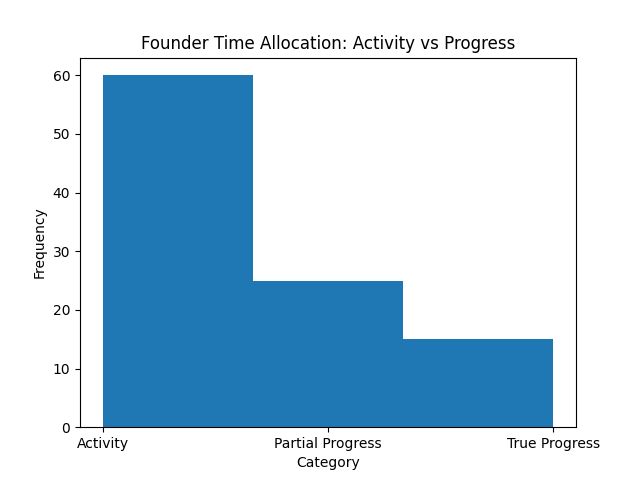
Here is a simple way to understand how founders spend time.
(Imagine this as a histogram-style breakdown)
- 60% of early-stage founders’ time = activity (tasks, meetings, execution noise)
- 25% = partial progress (learning, iteration, small wins)
- 15% = true progress (repeatable growth systems)
The problem is not activity.
The problem is too much of it without direction.
Why Founders Confuse Activity With Progress
This happens for a few reasons:
1. Activity is visible
You can see tasks being completed.
2. Progress is delayed
Results take time to show.
3. Pressure pushes activity
Investors, team, and market expect movement.
4. Metrics can be misleading
Vanity metrics look like progress.
Real Statistics That Should Concern You
- Around 90% of startups fail
- A major reason is not a lack of effort
- It is a misdirected effort
Many founders are not lazy.
They are focused on the wrong priorities.
Visual 2: Where Effort Gets Wasted (Bar Chart Concept)
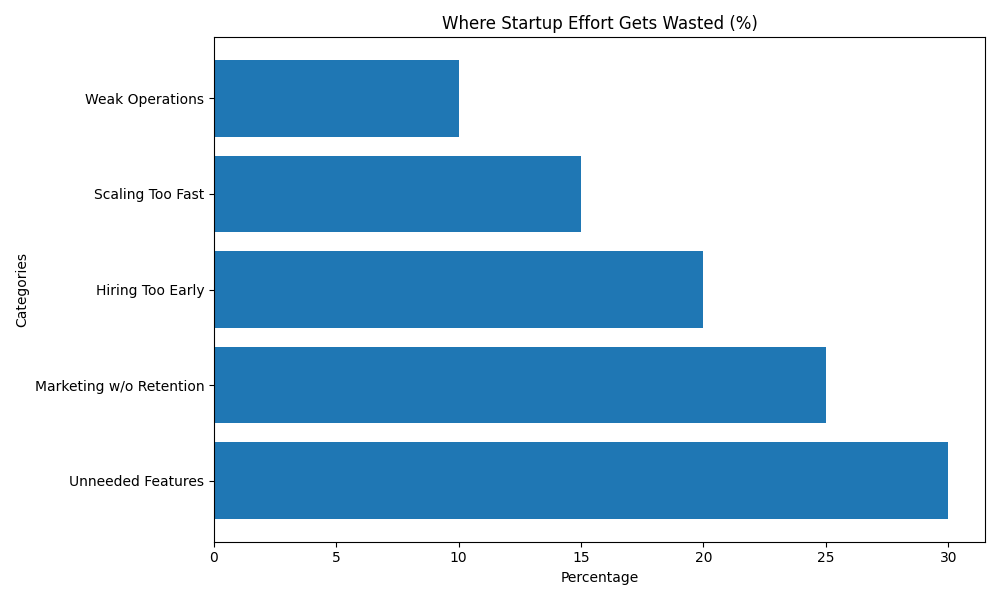
If we break down wasted effort in startups:
- 30% → Building features users do not need
- 25% → Marketing without retention
- 20% → Hiring too early
- 15% → Expanding too fast
- 10% → Poor operational systems
This is what activity without progress looks like in numbers.
Back to Victory Farms: The Real Lesson
Victory Farms did something many founders avoid.
They focused on one core system and made it work extremely well.
Instead of:
- Expanding too quickly
- Chasing multiple opportunities
- Scaling prematurely
They:
- Controlled their value chain
- Built operational efficiency
- Focused on repeatability
That is progress.
African Founder Reality
This lesson is even more important in Africa.
Because:
- Capital is limited
- Infrastructure is inconsistent
- Markets are fragmented
You cannot afford to confuse activity with progress.
Every move must count.
Story: The Busy Startup in Lagos
A founder builds a logistics startup.
Every day looks productive:
- Calls with drivers
- Marketing campaigns
- App updates
- Hiring dispatch staff
Three months later:
- Delivery times are still inconsistent
- Customers complain
- Revenue is unstable
Why?
Because they focused on doing more, rather than fixing the system.
When they finally paused, they realized the following:
- Routing was inefficient
- Pricing was unclear
- Operations were not standardized
Once they fixed those:
- Fewer deliveries
- More revenue
- Better customer experience
Less activity. More progress.
Visual 3: Progress Loop (Simple Framework)
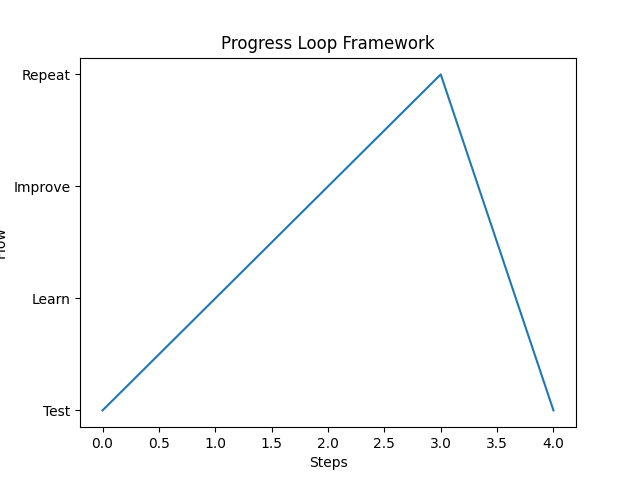
Think of progress as a loop:
Test → Learn → Improve → Repeat
Not:
Do more → Do more → Do more
Progress is structured. Activity is reactive.
How to Shift From Activity to Progress
Here is a simple way to start:
1. Ask Better Questions
Instead of:
- “What should we do today?”
Ask:
- “What actually moves the business forward?”
2. Focus on One Metric That Matters
Examples:
- Retention
- Revenue per user
- Cost per delivery
- Repeat purchases
3. Cut 50% of Your Tasks
Most tasks do not matter. Be honest.
4. Build Systems, Not Chaos
If something works, make it repeatable.
5. Slow Down to Speed Up
Rushing creates activity.
Thinking creates progress.
Reflection Questions (For Founders)
- Are we busy, or are we improving something measurable?
- Which of our activities actually leads to revenue?
- What are we doing repeatedly that is not working?
- If we stopped half our work today, what would break?
- Are we optimizing systems or just reacting daily?
A Hard Truth
You can work 12 hours a day and still fail.
Not because you did not try.
But because you were solving the wrong problems.
Final Thought
Victory Farms did not win because they worked harder.
They won because they worked on the right things.
That is the difference.
Activity fills your day. Progress builds your company.

Pingback: What Happens When Founders Build with Structure Instead of Guesswork - Founders Smith