

Why user growth does not always equal revenue and how African founders can navigate this challenge
Launching a startup is often exhilarating. You release your product or service and watch as users flock to it. The sign-ups, downloads, or registrations surge. Your social media is buzzing. Investors are impressed. You feel unstoppable.
But then comes the sobering reality: despite strong user growth, revenue is not following. Your burn rate remains high. Operational costs are rising. Investor questions become harder. The excitement of a growing user base is met with the anxiety of a missing revenue stream.
This scenario is common across industries globally and particularly relevant for African founders who often face limited access to funding, infrastructure constraints, and diverse customer markets. Understanding why users do not always convert to paying customers is essential to building a sustainable business.
FYLD: A Case Study in Users Without Immediate Revenue
From the recent deals list, FYLD, a London-based AI-powered frontline infrastructure intelligence platform, illustrates this challenge well. The startup raised $41 million in Series B funding from Energy Impact Partners and Partech.
- Early traction: FYLD was rapidly adopted by energy and infrastructure companies due to its ability to provide real-time insights and predictive maintenance analytics. The platform clearly demonstrated value to operational teams.
- Revenue lag: Despite adoption, revenue growth did not immediately match the user interest. Enterprise clients required long approval cycles, integration with legacy systems, and capital expenditure approvals.
For African founders, the FYLD example highlights a key lesson: user growth does not automatically translate to revenue. Monetization strategies, operational readiness, and market dynamics must be considered early in product development.
Why Users Might Not Pay
Several reasons explain why users do not immediately bring revenue:
- Long Sales Cycles: Enterprise or government clients may take months to approve purchases.
- Freemium Models: Free tiers attract users but can delay or reduce paid conversions.
- High Acquisition Costs: Spending to acquire users can exceed the revenue generated in early months.
- Market Readiness: Users may want the product but lack the willingness or ability to pay.
- Operational Bottlenecks: Startups may not have the systems or staff to onboard and support paying customers effectively.
African startups, particularly in fintech, agritech, health-tech, and digital infrastructure, face similar hurdles. Recognizing these challenges early can prevent founders from being blindsided by the gap between traction and revenue.
User-to-Revenue Lag
Startups worldwide often experience delays between acquiring users and generating revenue. The histogram below illustrates a typical distribution:
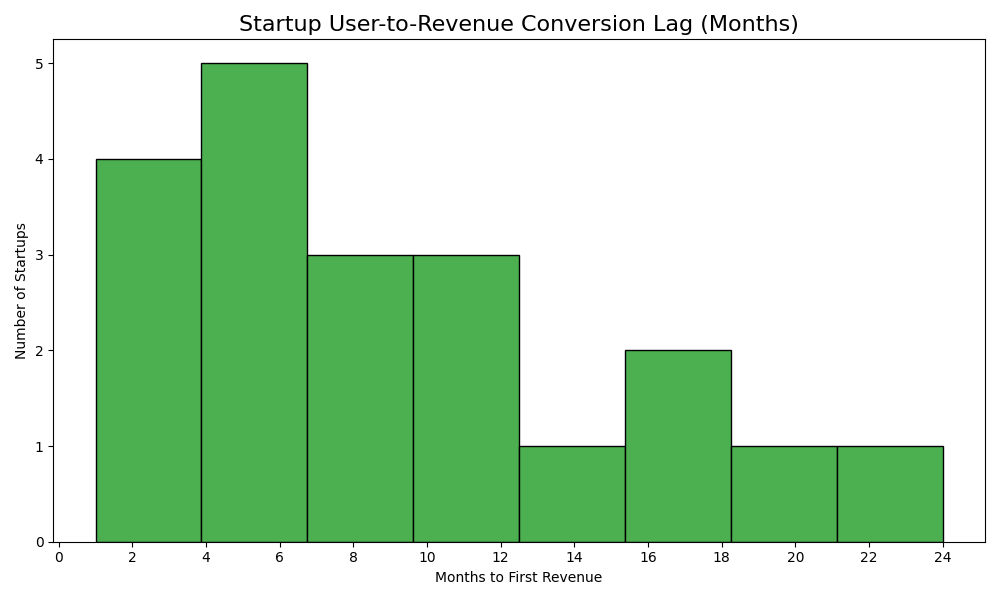
As seen, most startups take 3 to 12 months to convert initial users into paying customers. A smaller number may take longer, especially for enterprise or regulated markets. For African founders, planning for this lag is crucial for financial sustainability.
Common Reasons Users Do Not Translate into Revenue
The bar chart highlights key challenges startups face when trying to monetize user growth:
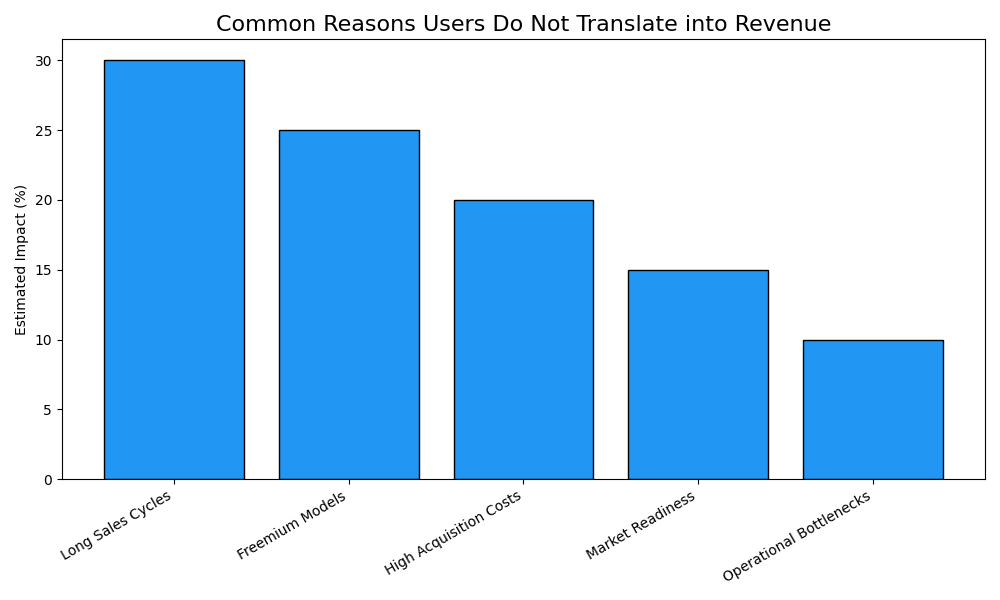
Understanding these factors helps founders anticipate delays and implement strategies to convert users into paying customers more effectively.
African Startup Perspective
Consider a Lagos-based agritech startup providing digital farm advisory services. Farmers eagerly sign up for advice on crop planning and pest control. Early user metrics are promising. Downloads and registrations surge.
However, revenue lags because:
- Farmers often cannot pay immediately due to seasonal cash flow constraints.
- Payment collection requires manual verification in rural areas.
- Operational teams are not fully trained to onboard large numbers of paying customers.
The founders realize they need to build systems for billing, support, and retention before expecting revenue to match user growth. This mirrors the FYLD case: traction is important, but sustainable monetization requires deliberate effort.
Strategies to Turn Users into Revenue
1. Align Pricing Models with Market Reality
African markets are diverse. What works in one country or region may fail elsewhere. Consider mobile money integration, seasonal payment plans, or flexible pricing to match customer capacity.
2. Invest in Operational Infrastructure
Revenue cannot scale without systems in place to support onboarding, payments, and customer service. This includes staff training, automated workflows, and reliable tech infrastructure.
3. Segment Users by Monetization Potential
Not all users will pay immediately. Segment based on willingness to pay, usage patterns, or enterprise readiness. Focus initial monetization efforts on high-value users.
4. Leverage Early Revenue for Growth
Once paying customers are secured, reinvest revenue into improving systems, marketing, and scaling to additional users. Avoid relying solely on external funding for operations.
5. Plan for Long Sales Cycles
Enterprise clients, government partners, and institutional customers often have extended procurement processes. Budget and plan for this delay. Monitor cash flow carefully during these waiting periods.
Revenue Conversion Framework for African Founders
A simple framework can help founders manage the user-to-revenue challenge:
- Attract Users (Build Fast)
- Launch pilots and promotions
- Test features and pricing
- Collect usage feedback
- Enable Payments (Move Slow)
- Implement billing and payment systems
- Train support teams
- Ensure compliance and operational readiness
- Segment and Prioritize
- Identify high-value users
- Focus monetization efforts strategically
- Reduce churn risk by supporting early paying users
- Iterate on Monetization
- Test new pricing strategies
- Optimize payment flows and incentives
- Adjust offerings based on revenue performance
- Scale Revenue Strategically
- Expand geographically or to new segments
- Monitor metrics like customer acquisition cost, lifetime value, and retention
- Ensure cash flow supports sustainable growth
Fintech Example
A mobile payment startup in Accra experiences high user adoption during its first three months. Users enjoy the free service, but revenue is minimal because the transaction fees are collected after settlement delays.
The team adopts the framework:
- Build Fast: Promote the platform, grow the user base, and gather feedback.
- Move Slow: Implement secure payment processing, educate merchants, and integrate mobile wallets.
- Iterate: Adjust transaction fees based on market acceptance.
- Scale Strategically: Expand to nearby districts once processes are stable.
By following this approach, the startup converts initial users into paying customers and stabilizes its revenue stream without compromising growth.
Practical Lessons for African Founders
- User growth is important but insufficient. Traction proves demand but does not guarantee cash flow.
- Operational readiness is essential. Systems must be in place before expecting revenue.
- Patience is part of strategy. Long sales cycles, market readiness, and payments infrastructure require planning.
- Financial discipline matters. Ensure the runway can support the lag between users and revenue.
- Segment and prioritize. Focus on high-value users who can pay early and sustain growth.
Conclusion
When users come, but money does not, startups face a critical inflection point. Traction is exciting, but without revenue, growth is unsustainable.
The lessons from FYLD and African startups in fintech, agritech, energy, and digital services show that:
- Users are not revenue by default.
- Operational readiness, payment infrastructure, and monetization strategy are crucial.
- Patience and deliberate planning create sustainable revenue streams.
African founders must balance rapid adoption with strategic monetization, using frameworks, metrics, and systems to ensure their growing user base becomes a stable revenue source.
By following this approach, early excitement translates into financial sustainability, operational efficiency, and long-term impact, making it possible to build startups that thrive in Africa’s dynamic markets.


Pingback: Startup Metrics Every Founder Should Track Before Raising Capital - Founders Smith